
CCTV Drain Cameras Now Available at Jetter Conversions
Updated: Jul 14

When you work in drainage, it is not always enough to clear the blockage and move on. Sometimes you need to know what caused the problem in the first place. Sometimes you need to show the customer exactly what is going on underground. And sometimes you need evidence before you can recommend the right repair, replacement, patch lining or follow-up work.
That is where CCTV drain cameras come in.
At Jetter Conversions, we now stock a range of professional CCTV camera systems for drainage engineers, plumbers and contractors. These systems are designed to help you inspect pipework, identify defects, record footage, trace lines and give customers clearer answers on site.
Whether you are looking for a smaller camera system for domestic pipework, a good all-rounder for everyday surveys, or a longer-reach setup for larger drainage jobs, there is now a system in the range to suit different types of work.
Why CCTV cameras matter in drainage work
A jetting machine is there to clear, clean and restore flow. A CCTV camera helps you understand what is actually happening inside the pipe.
That can make a big difference, especially when you are dealing with repeat blockages, damaged pipework, root ingress, collapsed sections, poor falls, joint issues, scale build-up or suspected rodent entry points.
Without a camera, you are often working from symptoms. With a camera, you can see the cause.
For drainage engineers, that means you can give better advice, provide clearer evidence and avoid guesswork. For customers, it gives them confidence because they can see the issue for themselves rather than just being told what might be wrong.
CCTV inspection is also useful before and after work is carried out. You can use it to check the condition of a pipe before jetting, confirm that a blockage has been cleared, inspect for damage after cleaning, or record footage as part of a report.
For many drainage businesses, adding CCTV inspection is not just about buying another piece of equipment. It can also open up extra opportunities, including survey work, pre-purchase inspections, commercial maintenance, insurance-related work and follow-on repairs.
Choosing the right CCTV camera system
The best place to start is by looking at the type of work you do most often.
Think about the size of pipework you usually inspect, how far you need to push the camera, whether you want a tablet-based reporting setup, how much space you have in the van, and whether you already have compatible equipment.
A smaller system may be ideal if you mainly work on domestic pipework and tight-access jobs. A 60m system may be better if you want a strong all-rounder for regular drainage inspections. A 90m system gives you more reach for larger or more demanding survey work.
It is similar to choosing a jetting machine. The right choice depends on the jobs you actually do.
Which CCTV camera system is right for you?
If you want something compact and easy to handle

If most of your work is on smaller pipework, the Scanprobe X40 is a good place to start.
The X40 is designed for pipes from 50mm to 150mm, making it well suited to plumbers, drainage engineers and contractors working on domestic drainage, smaller commercial lines and tighter access jobs.
With a 40m push rod and 30mm self-levelling camera head, it gives you a smaller, lighter system that is easier to transport and handle on site. That can be useful when you do not want to carry a larger camera system for a relatively straightforward inspection.
The X40 is available in two options. You can choose the X40 system with an 8” tablet if you want a complete setup, or the X40 coiler without a tablet if you already have compatible equipment and only need the coiler.
That makes it a flexible option depending on what you already have in your van.
If you want a good all-round camera system
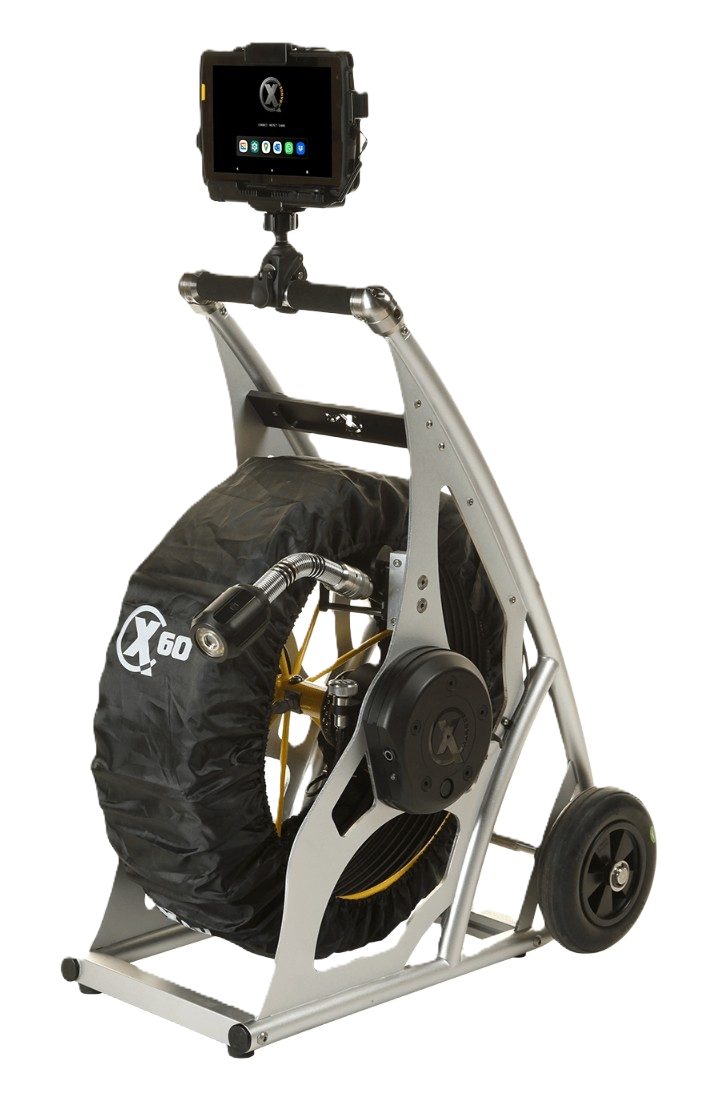
For a lot of drainage engineers, the Scanprobe X60 will be the best all-round option.
It gives you a 60m push rod, 44mm self-levelling camera head and an 8” tablet, making it suitable for pipework from 50mm to 300mm.
This makes it a strong fit for everyday drainage survey work, especially if you are inspecting domestic and commercial pipework and want a system with more capability than a compact 40m unit.
The tablet-based setup is also useful if you want to record footage, add observations and share information more easily from site. Features such as on-screen meterage, camera traceability, text overlay, PDF editing, clock position observations and report sharing can help make the inspection process more professional and efficient.
If you want one camera system to cover a wide range of regular work, the X60 is likely to be the one to look at first.
If you need more reach for larger jobs
If your work regularly involves longer runs or larger drainage inspections, the Scanprobe X90 gives you the extra reach.
With a 90m push rod, 44mm camera head and 10” tablet, the X90 is designed for more demanding pipeline inspection work. The longer rod gives you more flexibility on site, while the larger tablet display can make viewing, recording and reporting easier during longer surveys.
This system is particularly useful for engineers who are doing more commercial work, larger sites, longer pipe runs or surveys where a smaller system may not be enough.
The X90 also includes useful reporting and inspection features, including PDF editing, clock position observations, disc brakes, extended battery life and report sharing through apps such as Outlook and WhatsApp.
If you are stepping into more advanced survey work, or you simply need the extra length, the X90 gives you that next level up.
If you prefer a traditional standalone camera setup

The Scanprobe Maxprobe is another strong option, especially if you prefer a more traditional camera control box setup rather than a tablet-based system.
Supplied with a 60m coiler, 10.4” display and 44mm camera head, the Maxprobe is designed for professional drainage inspection work and regular site use.
It is a practical choice for engineers who want a robust, field-ready system with clear viewing, built-in meterage, image and video storage, USB export and long battery running time.
For many contractors, the Maxprobe will feel familiar and straightforward. It gives you the tools you need for everyday inspection work without overcomplicating the process.
Tablet system or control box system?
One of the biggest choices is whether you want a tablet-based X-Range system or a more traditional Maxprobe setup.
The X40, X60 and X90 systems are part of Scanprobe’s X-Range and are designed around a modern tablet-style workflow. These are useful if you want a more app-based system, easier reporting options and the ability to manage survey information in a more flexible way.
The Maxprobe uses a control box with a built-in screen. This may appeal to engineers who prefer a more traditional setup with everything contained in one robust unit.
Neither option is necessarily better for everyone. It comes down to how you like to work.
If you want a modern tablet-based setup, look at the X-Range systems. If you want a strong standalone camera system with a control box, look at the Maxprobe.
Overview:
Scenario | Best camera system for the job | Why it suits the job | |
Smaller domestic pipework, tight access jobs and everyday inspections | Scanprobe X40 Coiler with 8” Tablet |  | Compact, lightweight and easy to handle, with a 40m rod and 30mm camera head for 50mm–150mm pipework |
You already have a compatible Scanprobe viewing setup and do not need another tablet | Scanprobe X40 Coiler – No Tablet |  | Gives you the X40 coiler on its own, making it a practical option if you already have the right control or viewing equipment |
General drainage inspection work across domestic and commercial jobs | Scanprobe X60 with 8” Tablet | | A strong all-round option with a 60m rod, 44mm camera head and tablet-based reporting for pipes from 50mm–300mm |
Longer pipe runs, larger sites and more demanding survey work | Scanprobe X90 with 10” Tablet | 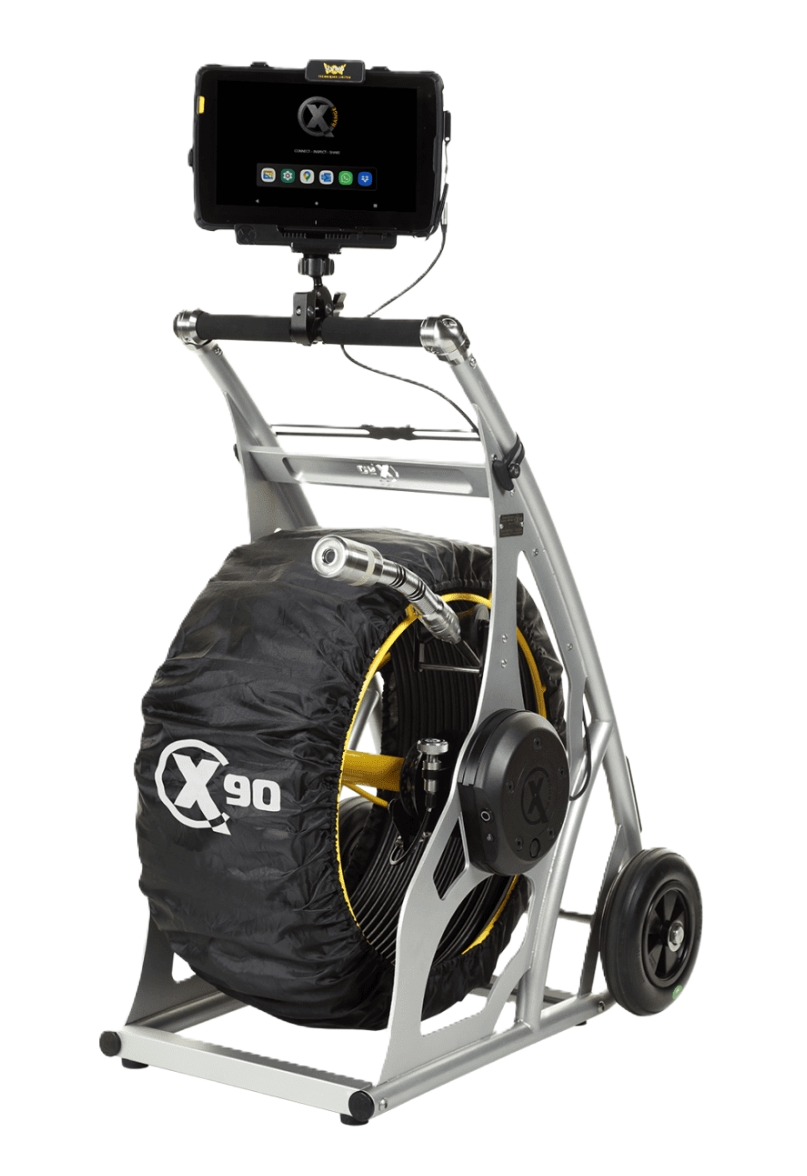 | Offers a 90m rod, larger tablet and longer reach for engineers carrying out bigger or more involved inspections |
Engineers who prefer a traditional standalone camera system with a control box | Scanprobe Maxprobe with 60m Coiler | | A robust 60m system with a built-in 10.4” display, meterage, video recording and USB export |
CCTV and jetting work well together
For drainage engineers already using a jetting machine, a CCTV camera is a natural addition. Jetting clears the problem. CCTV helps you understand the problem.
Together, they allow you to offer a more complete service. You can clear the blockage, inspect the pipe, show the customer what has happened, and recommend the next step if further work is needed.
That could be more thorough cleaning, descaling, root cutting, patch lining, pipe repair, rodent prevention or ongoing maintenance.
It also helps protect your business. If you have footage before and after the job, you have a clearer record of what was found and what work was carried out.
CCTV cameras now available from Jetter Conversions
We are pleased to now offer a range of Scanprobe CCTV camera systems. These systems give drainage engineers, plumbers and contractors more choice when it comes to pipe inspection, survey work and on-site reporting.
Whether you are looking for a compact X40 system, a 60m all-rounder, a longer-reach X90, or a Maxprobe camera system with coiler, we can help you choose the right setup for your work.
If you are not sure which camera system is best for you, feel free to get in touch. We are always happy to talk through the type of jobs you do, the pipe sizes you usually work on, and what you need from a camera system.
You can also browse our CCTV camera range online and choose the system that best fits the way you work.


